
Scammers have started targeting ordinary people with fake text messages (SMS) that impersonate banks or individuals, aiming to make money or steal data.
Cybercriminals use a smishing tactic and gain access to bank and personal data with a single click on unknown links.
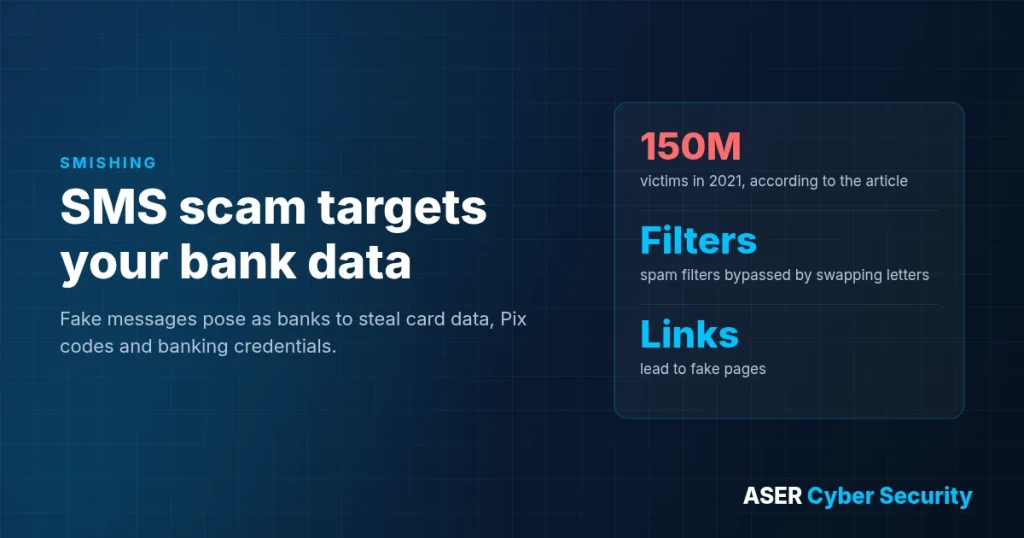
Despite spam filters, scammers have found ways to get around them by swapping the letter “i” for “I” and replacing the spaces between words with other characters.
How does the SMS scam work?
The goal of this type of scam is to steal credit card data, Pix codes (Pix is Brazil's instant payment system) and banking credentials.
Using this information, scammers can commit fraud in other people's names. “It's important to remember that banks never send links asking you to update your data by message — whether by SMS, WhatsApp or email,” warns Fabio Assolini, a security analyst at Kaspersky.
When you receive any SMS message that seems odd, you will often notice links to forms or websites.
If you click one of these links, cybercriminals may have set up malware or malicious pages that steal bank and personal data.
As simple as this scam may seem, it happens more often than people think.
In 2021 alone there were more than 150 million victims. These numbers show that most people are far more likely to trust a text message than an email.
It's important to be careful about what you click and what you use. If you handle important information, you need to be even more careful.
How to avoid SMS scams?
To avoid these kinds of scams, we suggest following a few steps that will help prevent the theft of your data.
- Use only the official channels provided by your bank for any transaction;
- Check the website address and the SMS sender. If it's unknown, try confirming with your bank whether the information is true;
- If you receive a promotion, check whether the offer is real on the official websites and social media profiles. If in doubt, call your bank or the company that issued your card;
- If you're not sure a page is safe, don't fill out forms with personal information or make any payment.
- Finally, it pays to invest in security software. You can never be too careful.
???? Would your team fall for a fake SMS? The ASER Phishing Platform simulates SMS, email and phone scams to train employees.
You should take the security of your data extremely seriously, and even more so when using a company phone, since it may hold data that cannot be compromised.
For more information and to improve the security of your data, information and systems, just talk to one of our specialists.
Is your company's data protected against scams?
For more than 20 years, ASER has protected Brazilian companies with 100% managed security. Talk to an expert and get a free assessment of your business risks.