
A few weeks ago, reports began circulating about a new scam that involves scheduling a Pix transfer (Pix is Brazil's instant payment system) and then asking for the money back.
Although its ease and speed for transferring money have made Pix increasingly popular, it is not immune to fraud. Authorities have been warning about a new scam that uses the instant payment platform launched by Brazil's Central Bank in November.
According to reports, criminals use scheduled Pix, a feature that lets customers schedule a transfer for a future date.
Here is how the scam works.
How does the scheduled Pix scam work?
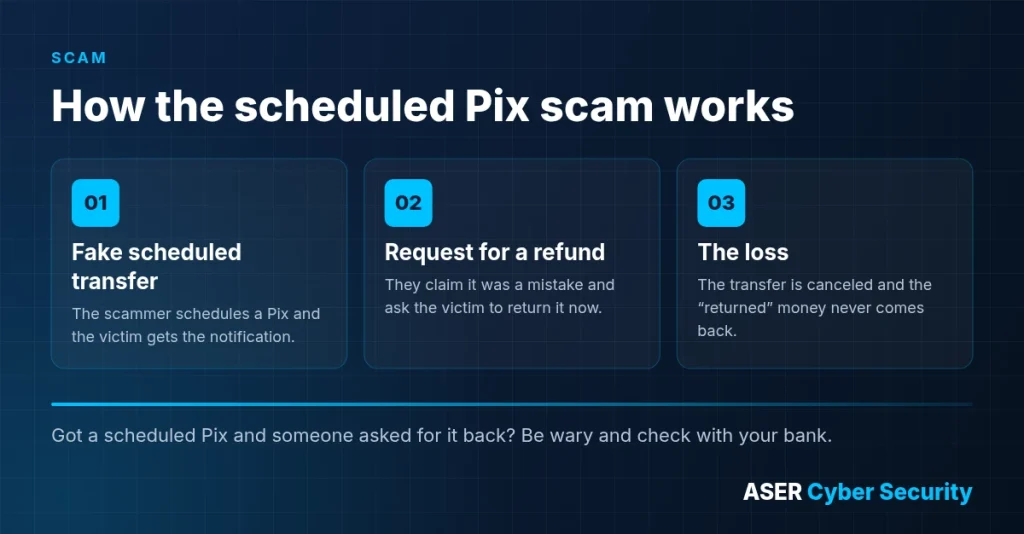
The criminals lure their target by scheduling a Pix transfer to the victim, who is notified about the transaction by their own bank.
From that moment on, the scammer contacts the victim, claims the transfer was a mistake and asks the victim to return the money as quickly as possible.
But the scheduling feature does not transfer the funds immediately, only on the chosen date. The money that leaves the account is the victim's own, and the scheduled transfer is canceled by the scammer.
The scammers' goal is to get the victim to transfer the money right away, and to do so they use tricks such as social engineering to convince the victim that someone urgently needs it.
The criminals' only intention is to get the victim to “return” the money and then cancel the scheduled transfer.
How can you protect yourself from the scheduled Pix scam?
The best advice is to stay alert whenever you receive a notice about a scheduled Pix.
If someone reaches out asking you to return the money, be suspicious.
In that case, you can tell the person that the scheduled transfer can be canceled so the transaction never goes through.
If you fall victim to this scam, it is important to gather as much information about the scammer as you can, such as a screenshot of the scheduled Pix receipt or the phone number they used to contact you.
Next, go to a police station and file a police report.
With the report in hand, the victim can contact the financial institution, explain what happened and look for ways to resolve the problem.
It is important for everyone to keep in mind that, according to Brazil's Central Bank, this type of scam cannot actually be carried out.
The Pix recipient is only notified when the money arrives in the account, so always check the amounts and confirm with your bank.
Everyone should take precautions against all kinds of scams.
There will always be people trying to take advantage of opportunities, and staying alert and adopting security and verification systems will keep you from falling for scams like this one.
???? Scams like this one exploit social engineering. The ASER Phishing Platform prepares your team to recognize these traps.
Count on Aser Security to fully strengthen the security of your data and systems.
Talk to one of our specialists and get access to a vulnerability assessment.
Can your team recognize a scam?
For more than 20 years, ASER has protected Brazilian companies with 100% managed security. Talk to an expert and get a free assessment of your business risks.