
Two internal campaigns recorded the same click rate: 8%. In the first, only 9% of people reported the message. In the second, 31% reported it, and the first report came in after three minutes, compared with 18 in the previous round. In this fictional example, clicks didn't go down, but the security team gained time and received more signals to investigate. A dashboard that showed only clicks would miss that progress.
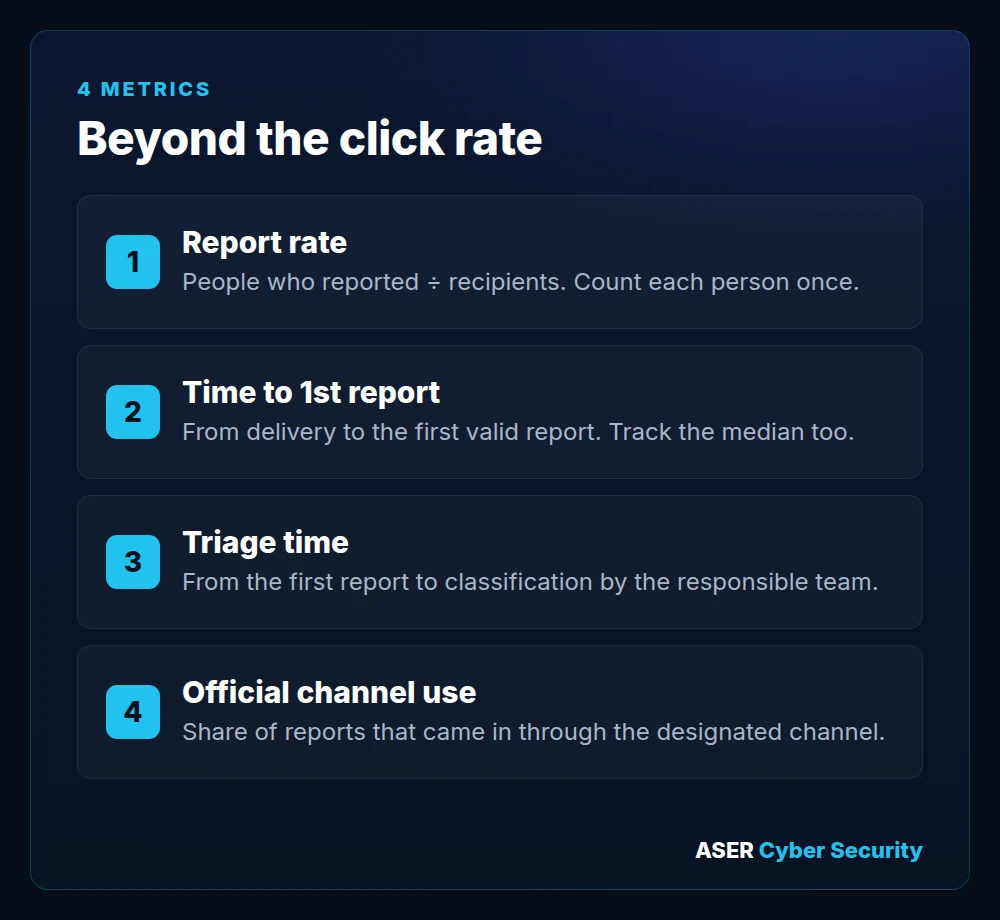
Four metrics that help you act
- Report rate. Divide the number of people who reported by the number of recipients who received the simulation. Count each person once, even if they reported more than once or reported after clicking. This tells you whether the reporting channel is known and used.
- Time to first report. Measure from delivery of the exercise to the first valid report. Also track the median among those who reported: a single fast report can hide the fact that most reports were slow to arrive.
- Triage time. Measure from the first report to classification by the responsible team. If users report quickly but the alert sits in the queue, your next investment should go into the response workflow.
- Use of the official channel. Among identifiable reports, measure the share that came through the designated channel. If many people ask for help through other means, check whether the official channel is easy to find before repeating the guidance.
Compare like-for-like campaigns
Click volume varies with how difficult the message is and how experienced the audience is. The NIST Phish Scale helps rate that difficulty and put click and report rates in context. To assess trends, compare similar groups and time windows, record the difficulty, and filter out automated events (such as link scanning by security tools), when you can identify them, before counting a click as human.
Use authorized simulations and never ask for passwords, MFA codes, or other secrets. Share aggregated results, protect the privacy of small groups, and offer guidance without singling people out. The goal is to make the right behavior easier: recognizing something suspicious and reporting it quickly.
Test one improvement per round
In your next exercise, pick one concrete improvement to test. If the bottleneck is the reporting channel, make it easier to access and see whether more people use it. If it's triage, adjust the internal workflow and measure how much time the team saves.
Template: awareness dashboard
| Round and difficulty | Delivered | Unique reports | Report rate | Time to 1st report | Triage time | Improvement to test |
|---|---|---|---|---|---|---|
The ASER Phishing Platform simulates email, SMS, and voice attacks, trains users at the moment they slip, and delivers these metrics ready for round-to-round comparison. Talk to an expert.