
An alert ties one of your company's email addresses to a data breach. That warrants triage, but the record alone does not confirm a compromise. It could be an address used on a third-party service, the exposure of a corporate credential, or a lead that, combined with internal logs, points to misuse of the account. Each scenario calls for a different response.
Classify what was found
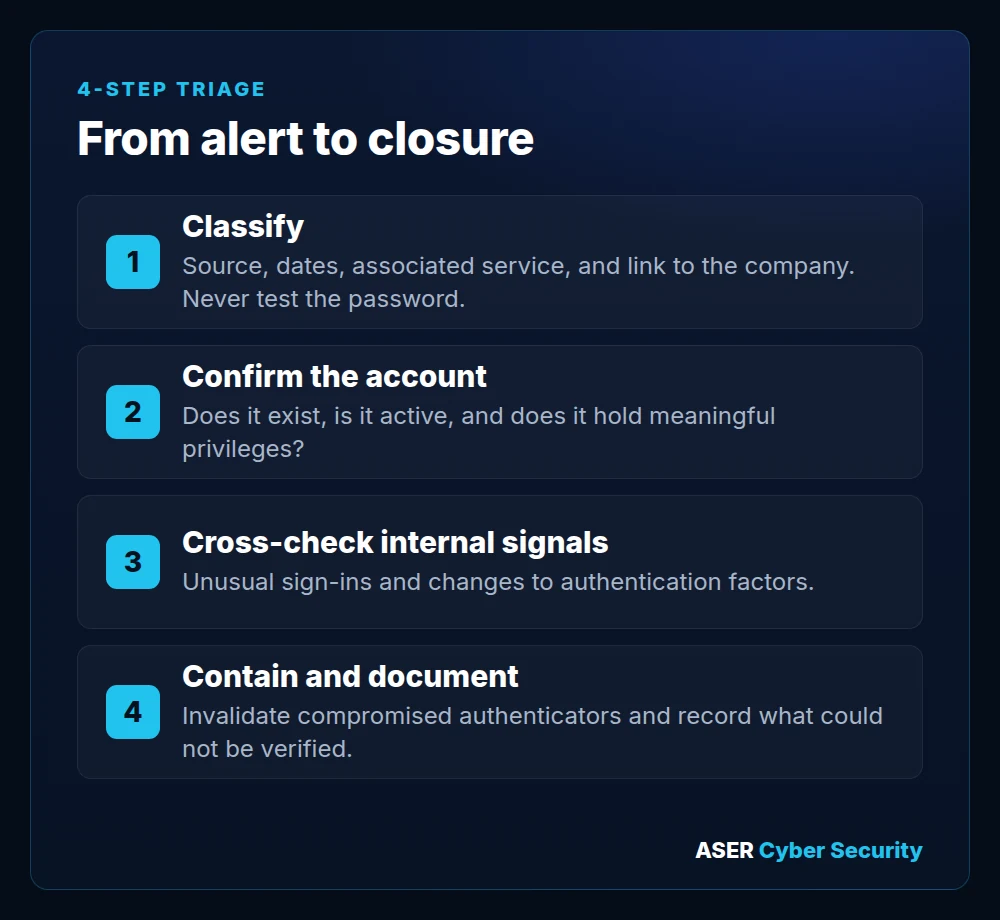
Record the source of the alert, the available dates, the associated service, and the connection to your organization. Check internal sources to confirm whether the account exists, is active, and holds meaningful privileges. Do not try to log in with the exposed material or paste passwords or tokens into tickets, spreadsheets, or messages.
If the only connection is an email address used on a third-party service, investigate the context and follow your internal security process; don't treat the mere presence of the address as unauthorized access to the corporate environment. If there is evidence that a corporate authenticator has been compromised, prioritize invalidating and replacing it. NIST SP 800-63B-4 provides guidance on handling compromised authenticators. Depending on the case, the team may need to revoke sessions, review account recovery methods, and preserve logs before they expire.
Cross-check the alert against internal signals
Within the authorized scope, search the available logs for unusual sign-ins, changes to authentication factors, and other activity that doesn't match expected use. If there are signs of misuse, trigger your incident response process. If log coverage is limited, document that limitation: finding no evidence is not the same as confirming that nothing happened.
Suppose an employee's email address shows up in a breach at a fictional online store. The alert does not show that the corporate password was exposed. The team checks whether the account is active, reviews the available logs, and records its conclusion along with what it could not verify.
Assign someone to see it through to closure
A useful alert ends with an owner, an action, and evidence of closure. If your organization needs to run this triage often, consider a threat intelligence service with clear criteria for monitoring, validating, and escalating findings.
Template: credential triage
| Alert and date | Confirmed connection | Internal evidence | Action | Owner | Closure |
|---|---|---|---|---|---|
| Account on a fictional third-party service | Corporate email | No signs in available logs | Review logs and record the outcome | Security | Under review |
The ASER Cyber Threat Intelligence monitors breaches and forums, validates what actually affects your company, and delivers each alert with the context needed for triage. Talk to an expert.