
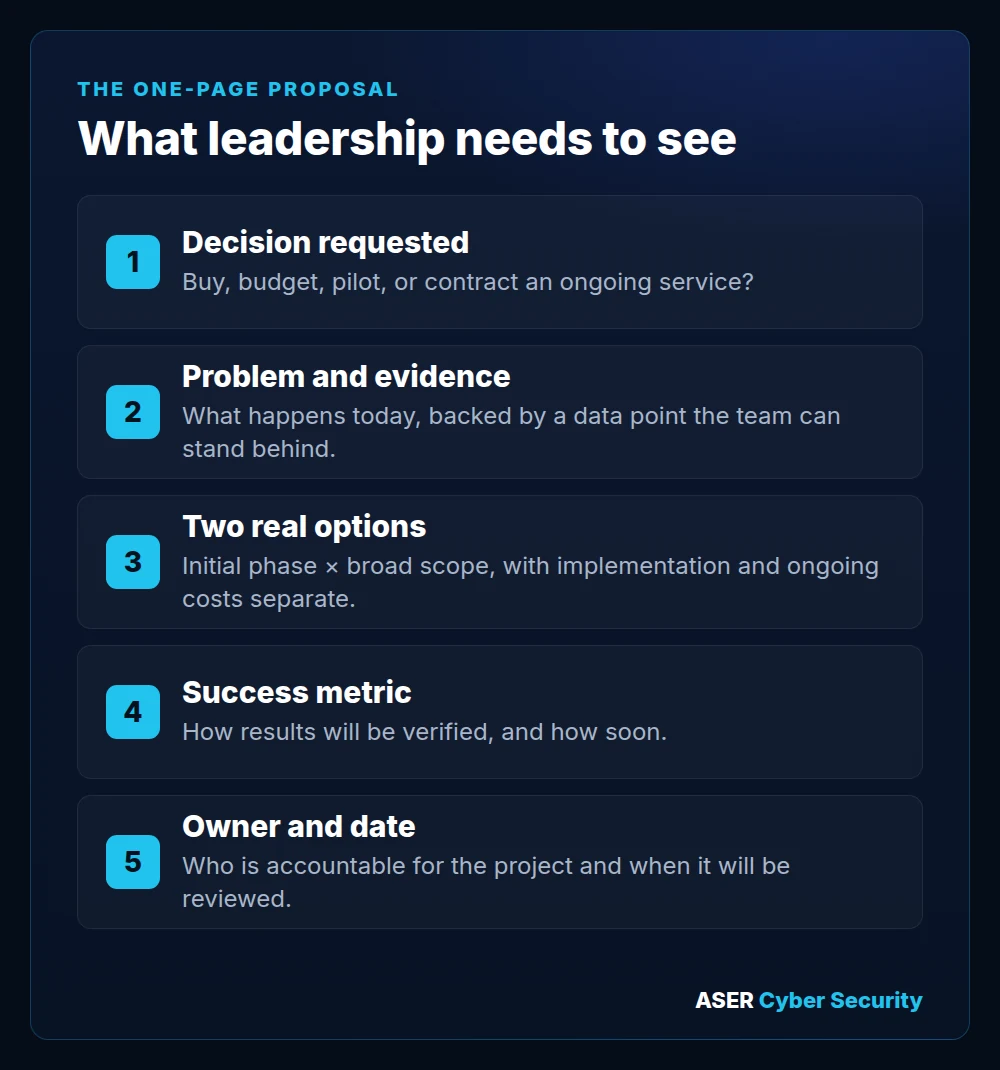
A strong proposal to leadership starts with the decision that needs to be made. Asking for approval to buy a tool is different from asking for authorization to build a budget, pilot an approach, or contract an ongoing service. Make clear which decision is on the table before you discuss vendors.
Summarize the problem on one page
Describe what happens today and which process could be affected. Use a data point your team can stand behind: how many locations depend on a service, how long the team took to analyze an alert during an exercise, or which systems still don't generate the logs you need. If you don't know the financial impact, don't make up an estimate. State what is already known and what still needs to be measured.
Next, present two options that leadership can realistically choose between. An initial phase might cover one critical process and measure the gains before expanding. A second option might include other areas from the start. For each one, separate implementation from ongoing operations, list the dependencies, and explain what is out of scope.
Show how results will be measured
Picture a fictional company that receives alerts after hours but has no one assigned to triage them. Instead of asking to buy a SIEM, the team could propose a pilot covering two log sources and an escalation workflow. The success criterion could be verifying, through authorized exercises, whether an alert reaches the right person within the agreed time and whether that person knows how to respond.
If you have a reference from a comparable company, use it with permission or present an anonymized case. It helps explain how the work will be carried out, but it doesn't replace the effort estimate, the internal owner, or the success metric.
End with a clear ask
Close the page with the decision you're requesting, the investment range or the effort still to be estimated, the person accountable for the project, and the review date. If the company is still building the budget, ask for approval for that step. If it's already comparing proposals, apply the same criteria to every vendor.
Template: security project for leadership
| Field | What to include |
|---|---|
| Decision requested | Approve a budget, pilot, engagement, or expansion |
| Problem and impact | Affected process and business consequences |
| Evidence | A data point the team can stand behind |
| Options and gaps | Initial phase × broad scope; what still needs to be measured |
| Implementation and ongoing costs | Costs and effort broken out separately |
| Owner and date | Who is accountable and when it will be reviewed |
| Success metric | How and when results will be verified |
ASER Security can support technical sizing and scope comparison so the decision is grounded in risk and in the ability to execute. Talk to an expert.